Alcohol withdrawal syndrome is a set of physical and mental symptoms that can occur when a person with alcohol dependence suddenly stops or sharply reduces drinking alcohol. The brain adapts to regular alcohol use by changing how it balances calming and stimulating signals. When alcohol use stops, the body can become overactive, causing withdrawal syndrome symptoms ranging from mild anxiety and shakiness to life-threatening seizures and delirium tremens.
At Sophros Recovery, we help individuals in Jacksonville and across Northeast Florida take the next step toward recovery. Our alcohol addiction rehab team provides compassionate outpatient care that supports safety, stability, and long term change. If you are worried about alcohol use disorder, we can help you plan a safe path forward and connect you with the right level of care.
What causes alcohol withdrawal syndrome
Alcohol affects the central nervous system. With long term alcohol use, the brain reduces calming signals and boosts stimulating ones to balance the effects of alcohol. This brain adjustment is part of alcohol dependence.
When a person stops drinking alcohol suddenly, the calming effect of alcohol disappears, but the stimulating activity remains high. This imbalance triggers withdrawal. People who drink heavily over days or weeks are at higher risk, and withdrawal is more likely and more severe with a long history of alcohol use disorder.
Common symptoms of alcohol withdrawal
Symptoms can be mild, moderate, or severe, and they usually begin within hours of the last alcoholic drink.
- Mild symptoms: Anxiety, hand tremors, sweating, nausea, vomiting, headache, and trouble sleeping. Many people also notice restlessness and a fast pulse.
- Moderate symptoms: Confusion or difficulty thinking clearly, rapid heartbeat, elevated blood pressure, increased body temperature, and sensitivity to light or sound.
- Severe symptoms: Delirium tremens, often called DTs, can include seizures, visual or tactile hallucinations, severe agitation, high fever, and disorientation. This can be life threatening without immediate medical care.
Anyone at risk should not try to stop drinking alone. Professional medical supervision protects your safety and helps relieve symptoms. If seizures, trouble breathing, severe confusion, or a high fever occur, call 911.
Alcohol withdrawal timeline
The timing of symptoms can vary, but the general pattern follows known stages.
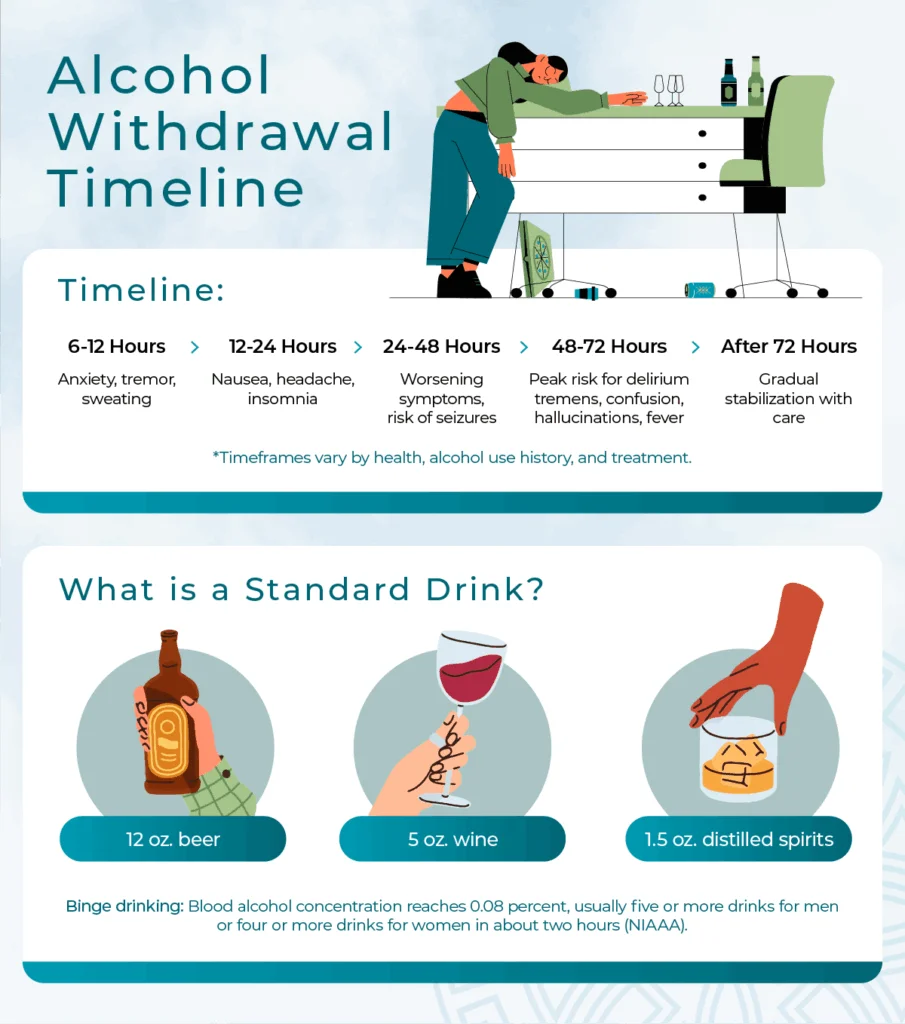
- 6 to 12 hours after the last drink: Early symptoms often begin with shakiness, anxiety, nausea, sweating, and headache. Sleep is often poor.
- 12 to 48 hours: Symptoms can worsen. The risk of seizures increases in this window. Some people experience perceptual disturbances such as seeing or hearing things that are not there.
- 48 to 72 hours: This is the peak risk period for delirium tremens. Hallucinations, high fever, severe confusion, and agitation can occur. This is when medical care is often most critical.
- After 72 hours: With appropriate medical treatment, symptoms tend to stabilize and then gradually improve over the next few days.
Individual experiences vary. Health conditions, the number of drinks consumed per day, blood alcohol concentration at the end of drinking, and the pattern of drinking in the past month can affect when and how strongly symptoms appear.
Understanding blood alcohol concentration and risk
Blood alcohol concentration, or BAC, is the amount of alcohol in your bloodstream at a given time. BAC rises with each alcoholic drink and falls as your body metabolizes alcohol. For people who drink heavily, if BAC drops quickly, the brain can react with withdrawal symptoms. Repeated cycles of high BAC followed by sudden drops can increase the risk of seizures and delirium tremens.
Why medical supervision is essential
Attempting alcohol detox at home can be extremely dangerous. Withdrawal can escalate quickly, and the most severe complications often occur without warning. Medical supervision provides:
- Safety monitoring: Vital signs, hydration status, and mental status are checked regularly. If symptoms change, the care plan can adjust right away.
- Medication support: Clinicians may use medications to control anxiety, tremors, nausea, or risk of seizures. This reduces discomfort and protects health.
- Stabilization of co-occurring conditions: Many people with alcohol use disorder also have mental health needs or medical conditions. Managing these reduces complications.
Medical guidance improves comfort and outcomes, and it reduces risks. The American Society of Addiction Medicine and other expert bodies emphasize that people with moderate to severe withdrawal, a history of seizures, heavy drinking in the past month, or major health issues should have supervised care.
Alcohol withdrawal treatment at Sophros Recovery
Sophros Recovery provides alcohol addiction rehab services that support sustained change. If you or a loved one needs help with alcohol use disorder, our team can discuss safe options, including arranging care that fits your medical needs and your life. We focus on person-centered, evidence-informed care for alcohol use, with respect and discretion.
How to prepare for alcohol detox
If you are considering stopping alcohol use to start outpatient rehab, plan for safety first.
- Before admission: Call ahead to discuss your alcohol use history, any prior withdrawal symptoms, and medications you take. Sharing details such as how many drinks you typically have, any high intensity drinking episodes, and any seizures or fainting spells helps the team plan safer care.
- During the assessment: Be honest about drinks consumed, any drug use, and mental health history. If you have used illegal drugs or sedatives, say so. This information protects you.
- Enlist support: A trusted person can help you get to appointments, remember instructions, and notice warning signs.
- Remove alcohol from your home to reduce triggers.
- Set realistic expectations: Withdrawal usually lasts several days. Plan time off work and set up child care if needed. Stock simple foods and fluids if a clinician says home recovery is safe for your situation.
If you have had severe withdrawal before, if you drink heavily most days, or if you have major health problems, seek medical supervision. The Substance Abuse and Mental Health Services Administration (SAMHSA) National Helpline can help you find local services if you are not sure where to start.
Binge drinking and alcohol use risk
Alcohol withdrawal risk is related to how much and how often a person drinks. Understanding binge drinking can help you make safer choices and recognize when to ask for help.
The National Institute on Alcohol Abuse and Alcoholism (NIAAA) defines binge drinking as a pattern of drinking that raises blood alcohol concentration (BAC) to 0.08 percent or higher. This typically happens after five or more drinks for men, or four or more drinks for women, in about two hours. This pattern of drinking often occurs on occasions such as a party or game day, and it is a particular concern for young adults and college students.
What does binge drinking do to you?
Short term harms include impaired coordination, alcohol intoxication, and injuries. Binge drinking increases the chance of alcohol poisoning because drinks consumed quickly can raise BAC faster than your body can metabolize alcohol.
Long-term risks of excessive alcohol use include high blood pressure, heart disease, liver disease, breast cancer, other cancers, depression, cognitive impairments, and alcohol use disorder. For young people, repeated binge drinking can disrupt brain development and learning.
Special considerations for young adults and early use
Young adults sometimes underestimate how alcohol affects their bodies. Starting alcohol use at an early age is linked to a higher risk of future alcohol use disorder. Excessive alcohol consumption can interfere with brain development. Even short periods of heavy drinking can harm attention and memory. Parents and caregivers can help by setting clear expectations, discussing the legal drinking age, and modeling safer choices.
Safety tips if you choose to cut back
If a clinician says it is safe to start at home, use these steps. If not, seek supervised care.
- Do not drink heavily and then quit suddenly. Tapering under guidance is safer for some people.
- Set a daily limit and space out drinks consumed. Track how many drinks you have and plan alcohol-free days.
- Avoid drinking alcohol on an empty stomach. Eat a meal and drink water first.
- Avoid mixing alcohol with illegal drugs, opioids, or benzodiazepines. These combinations are extremely dangerous.
- Ask your health care provider about medications that reduce cravings or help with co-occurring anxiety or sleep problems.
A withdrawal or cut-back plan and medication decisions should be made with a clinician who knows your medical history.
FAQs about alcohol withdrawal and safety
What happens when you suddenly stop drinking alcohol?
If you have alcohol dependence and you stop drinking alcohol suddenly, the brain becomes overexcited. You may notice anxiety, tremors, sweating, nausea, and trouble sleeping within hours. In moderate to severe cases, more dangerous withdrawal symptoms can develop, including seizures and delirium tremens.
What is the timeline of alcohol withdrawal?
In 6 to 12 hours, early symptoms start, such as shakiness and anxiety. Within the first two days, symptoms can worsen, and the risk of seizures increases. Between 48 and 72 hours is the peak risk for dangerous symptoms. After 72 hours, symptoms usually stabilize with treatment.
What are the long term risks of excessive drinking?
Excessive alcohol use harms health in many ways. The Centers for Disease Control and National Institute on Alcohol Abuse and Alcoholism report that excessive alcohol consumption raises the risk for liver disease, cancer, heart disease, injuries, and mental health problems. Alcohol misuse also brings major economic costs, including health care costs, to families and communities.
Alcohol-related problems can affect work, school, parenting, and relationships, and alcohol use can worsen existing mental health conditions and can make medications less effective. Excessive drinking is associated with social and legal risks, injuries from accidents, violence, legal problems related to driving or public intoxication, and increased family conflict.
Who is at higher risk for severe withdrawal?
Several risk factors are linked with more severe withdrawal:
- History of withdrawal seizures or delirium tremens
- Heavy drinking most days, frequent binge drinking, or high intensity drinking in the past month
- Medical issues such as liver disease, heart disease, seizures, or diabetes
- Mental health conditions such as depression, PTSD, or anxiety disorders
- Use of sedative medications, opioid medication, or illegal drugs
- Older age groups or poor overall health
- Limited social support at home
If any of these apply to you, plan medical supervision before you stop drinking.
Find help for alcohol addiction in Jacksonville
With professional support, alcohol withdrawal syndrome can be managed safely, and long-term treatment for alcohol use disorder can begin. If you or someone you love in the Jacksonville area is ready to stop drinking and build a healthier future, we can help.
We recognize that every person’s path with alcohol use disorder is unique. If you are unsure whether you need medical detox first, we will review your withdrawal risk factors and connect you with appropriate care. Our team will listen and help you map out next steps that match your goals and recovery needs.