Last Updated: September 14th, 2026
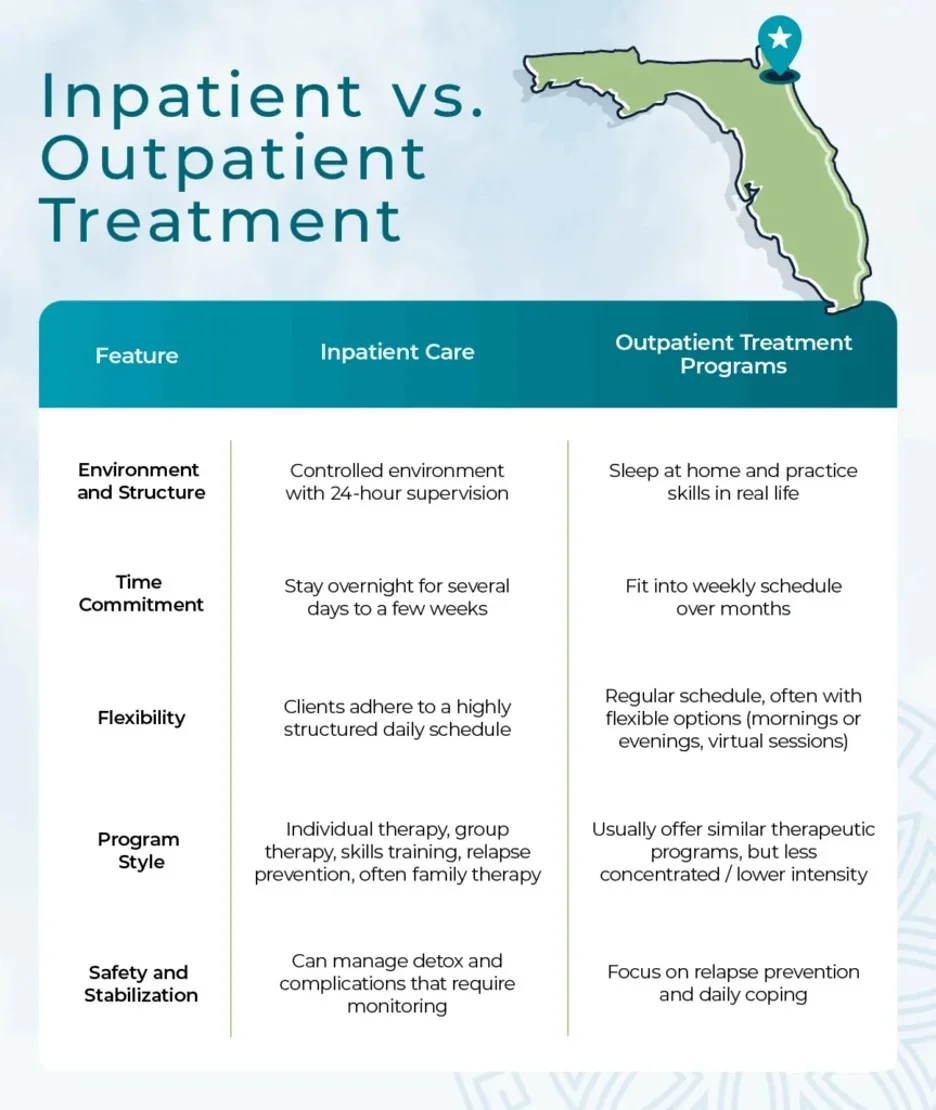
Inpatient treatment requires staying at a treatment facility with 24-hour support, while outpatient treatment allows you to live at home and attend scheduled care. Neither option is automatically better. The right level of care depends on your withdrawal risk, medical stability, home environment, treatment history, and ability to manage daily responsibilities safely.
For anyone comparing inpatient vs. outpatient rehab in Jacksonville, understanding how each level works can make the decision easier. Sophros Recovery specializes in outpatient addiction treatment and can help clients understand where and how outpatient care may fit into their recovery plan.
Key takeaways
- Inpatient treatment includes overnight care and 24-hour support.
- Outpatient treatment allows clients to live at home while attending scheduled treatment.
- Day treatment, IOP, and OP provide different levels of outpatient structure and flexibility.
- Some people move from inpatient or residential treatment into outpatient care as their needs change.
- Sophros Recovery provides outpatient treatment in Jacksonville and can support clients transitioning from a higher level of care.
Table Of Contents
What is inpatient treatment?
Treatment at an inpatient drug rehab generally involves staying overnight at a treatment facility and receiving structured care around the clock. Inpatient substance abuse treatment may include medical support, medication management, individual and group therapy, and help with stabilization, depending on the facility and a person’s needs.
SAMHSA notes that inpatient treatment may last days or weeks.1 The appropriate setting and length of care depend on each person’s clinical needs rather than a standard timeline. Some people also need medical withdrawal management before going into addiction treatment, like an inpatient program. Alcohol withdrawal, for example, can become dangerous for some people and may require medical monitoring for withdrawal symptoms.
Sophros Recovery doesn’t provide inpatient, residential, or detox services. When someone needs that level of support first, our team can help discuss appropriate next steps and plan for you to come to our intensive outpatient program in Jacksonville.
Read more about intensive outpatient care in our article: What Is an Intensive Outpatient
What is outpatient treatment?
Outpatient addiction treatment allows clients to live at home or in supportive housing while attending scheduled therapy and treatment services. Depending on their clinical needs, this level of care can provide structure and support for recovery while allowing clients to continue working, attending school, or caring for their families.
Outpatient substance abuse treatment can range from highly structured day programming to less intensive therapy and recovery support. Sophros Recovery specializes in outpatient programs in Jacksonville that combine therapy, recovery planning, and practical skill building.
Current outpatient levels of care at Sophros Recovery include:
- Day treatment program, partial hospitalization program-level support
- Intensive outpatient program (IOP)
- Evening IOP
- Virtual IOP
- Outpatient program (OP)
These options provide different amounts of structure based on a person’s current needs and recovery plan. Sophros takes a therapy-first, whole-person approach that may also incorporate mindfulness, case management, medication-assisted treatment (when clinically appropriate), and support from different recovery pathways.
The right outpatient program depends on a person’s clinical stability, treatment history, support at home, and how much structure they need in their recovery. Considering these factors can help guide their choice for outpatient addiction treatment.
IOP vs. PHP: Comparing Sophros’s outpatient levels of care
When comparing IOP vs. PHP, the main difference is the amount of structure and time spent in treatment. Both are outpatient programs, which means clients return home or to supportive housing rather than staying overnight at a treatment facility.
Day treatment program
This level of treatment at Sophros Recovery provides highly structured outpatient care, similar to the level of support offered in a partial hospitalization program (PHP). PHP is the most structured level of outpatient day treatment. Clients participate in consistent clinical programming and return home or to a sober housing afterward. This level of care may be appropriate for someone who needs substantial therapeutic support but doesn’t require inpatient or residential supervision.
Intensive outpatient program
An intensive outpatient program provides structured therapy with greater scheduling flexibility than a PHP. An IOP may be a good fit for clients who still need regular clinical support but can safely manage more of their recovery outside treatment hours.
Evening IOP
Sophros Recovery’s evening IOP provides structured treatment outside typical daytime hours. It can give clients with work, school, parenting, or other daytime responsibilities another way to participate in care when clinically appropriate.
Virtual IOP
Sophros Recovery’s virtual IOP provides structured outpatient treatment remotely to eligible Florida clients. This option may help reduce transportation or scheduling barriers while maintaining regular participation in therapy.
Standard outpatient program
A standard OP is Sophros Recovery’s least intensive outpatient level. It may provide continued therapy, recovery planning, and support as clients build greater stability and independence in daily life.
Who needs inpatient care?
Some situations call for the added safety of inpatient rehab, for instance:
There’s a severe substance withdrawal risk that requires monitoring and medical care
Previous outpatient treatment did not provide enough structure or support
An unstable or triggering home environment makes going home each night unsafe
Mental health symptoms or safety concerns require more support than an outpatient setting can provide
Needing more support doesn’t mean failure. It simply means a higher level of safety is appropriate before transitioning to outpatient care.
Who needs outpatient care?
Good candidates for outpatient treatment are medically stable, motivated to engage in structured counseling, and able to maintain some stability in daily life. If you can benefit from regular therapy, group therapy, and family therapy without 24-hour supervision, outpatient rehab can be a strong fit.
Sophros Recovery is designed for individuals ready to build long-term recovery habits through therapy and support while staying in their community. Our outpatient services are a stand-alone recovery program for many clients and can be a follow-up to residential treatment for others.
Mental health and dual-diagnosis considerations
Mental health can affect which level of addiction treatment is appropriate. Substance use may occur alongside concerns such as depression, anxiety, or trauma-related symptoms, and these needs should be considered during treatment planning. SAMHSA recommends coordinated care when someone is managing both a substance use disorder and a mental health disorder.2
Sophros Recovery provides outpatient support for co-occurring concerns within its scope, including depression, anxiety, and trauma-related symptoms and concerns. Treatment can address substance use alongside emotional health, coping skills, and patterns that affect everyday life.
Cost & insurance factors
The cost of inpatient vs. outpatient treatment varies based on the provider, level of care, treatment intensity, length of participation, insurance benefits, and individual needs.
Inpatient and residential programs may have higher overall costs because they can include overnight accommodations and 24-hour staffing in addition to treatment services. Outpatient care doesn't include residential housing, but costs can still vary substantially among PHP, IOP, and standard outpatient treatment.
Insurance coverage also varies. Mental health and substance use disorder services are included among essential health benefits in Marketplace plans, but deductibles, copays, network requirements, prior authorization, and specific covered services depend on the individual policy.
Sophros Recovery can verify insurance benefits and help clients better understand their coverage for outpatient treatment before beginning care. Coverage is not guaranteed, and out-of-pocket costs depend on the individual plan.
If medical detox is needed before outpatient care, Sophros can discuss appropriate referral or transition options. Sophros does not provide detox services.
Step-down and combined treatment paths
Many individuals begin inpatient care, then step down to outpatient care to continue progress. This approach offers intensive stabilization first, followed by skill-building, therapy, and accountability as a client returns to their routine.
Sophros Recovery doesn't provide detox, inpatient, or residential treatment. We commonly become the next step after residential treatment. In this way, inpatient vs. outpatient addiction treatment isn’t a binary choice—it’s a ladder that allows you to step down over time.
Get outpatient addiction treatment in Jacksonville, FL
If you’re comparing inpatient vs. outpatient addiction treatment in Florida, you don’t need to determine the appropriate level of care before reaching out for support.
The Sophros Recovery team can discuss current needs, assess whether our outpatient treatment may be appropriate, and recommend another level of care when outpatient treatment won’t provide enough support. Our team is here to help you understand your options and discuss a treatment path based on your current needs.
Frequently asked questions
Family involvement may be part of either type of treatment, but policies vary by provider and program. At Sophros Recovery, family therapy or support may be included when it is clinically appropriate and helpful to the client’s treatment goals.
Yes. A higher level of care may be recommended if outpatient treatment no longer provides enough support or if safety or medical needs change. Sophros can reassess your needs and help discuss an appropriate referral when inpatient or residential care is recommended.
A return to substance use may lead the treatment team to reassess your current needs. This may include reviewing safety, current substance use, withdrawal risk, treatment intensity, and whether a different level of care would be appropriate.
It can. Sophros Recovery offers medication-assisted treatment when clinically appropriate as one part of its therapy-first treatment approach. Medication is not required or appropriate for every client or every substance use disorder.
Some clients transition directly from detox into outpatient treatment. Timing depends on medical stability, clinical needs, and the recommendations made during assessment. Sophros Recovery does not provide medical detox.
Outpatient treatment requires regular participation in scheduled care, so transportation and travel time can affect which option is practical. Sophros offers evening IOP and virtual IOP options that may reduce scheduling or travel barriers for appropriate clients.
Packing requirements vary by inpatient or residential provider. Ask the facility directly for its list of approved and prohibited items before admission. Sophros Recovery does not provide inpatient addiction treatment, so we don’t provide a packing list to clients.
Policies vary between inpatient and residential facilities. Some programs limit personal devices, particularly during certain stages of treatment, while others allow access at designated times. Confirm the policy with the facility you are entering.
Treatment providers follow applicable privacy and confidentiality requirements for health and substance use treatment information. Policies related to communication, records, and family involvement may vary, so ask the provider how your information will be handled.
Your home environment is one factor clinicians consider when recommending a level of care. If substance use in the home creates safety concerns or makes recovery difficult, the treatment team may discuss a more structured level of care or another living arrangement.
Talk with your treatment team when your schedule changes. Depending on clinical appropriateness and availability, Sophros can discuss IOP, evening IOP, virtual IOP, or OP options that better fit your current responsibilities.
Step-down decisions are based on clinical progress, stability, treatment goals, and ongoing support needs. Your treatment team can reassess your progress and recommend a different level of care when appropriate, instead of relying on a fixed timeline.
Clinical Reviewer